what type of votes did benjamin tillman appeal to in sc
Primary Content
Benjamin Ryan Tillman
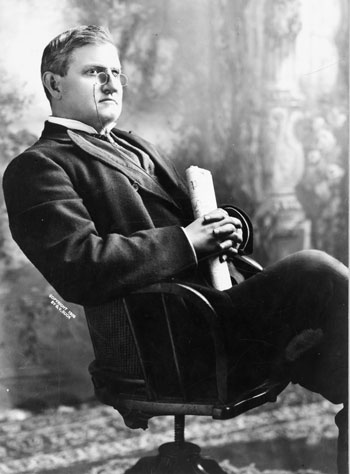
Benjamin Ryan Tillman Jr. (Aug. eleven, 1847-July 3, 1918), governor of S Carolina and U.S. senator, was built-in on August 11, 1847, at Chester, his family'due south plantation in Edgefield District, South Carolina, the youngest child of Sophia Hancock and Benjamin Ryan Tillman, planters and innkeepers. His parents had 11 children — seven sons and four daughters.
Their children were equally follows:
- Thomas Frederick Tillman, (d. August 20, 1847), killed in the Mexican-American War;
- George Dionysius Tillman (1826-1901), married Margaret Jones;
- Martha Annsybil Tillman (1828-1886);
- Harriet Susan Tillman (1831-1832);
- John Miller Tillman (1833-1860), killed in a feud;
- Oliver Hancock Tillman (1835-1860), killed in domestic dispute;
- Anna Sophia Tillman Swearingen (1837-1909);
- Frances Tillman Simpson (1840-1923);
- James Adams Tillman (1842-1866), wounded at boxing of Chickamauga;
- Henry Cumming Tillman (1844-1859), who died of typhoid; and
- Benjamin Ryan Tillman (1847-1918).
The Tillman family had resided in South Carolina since before the American Revolution. When "Ben" was two years old, his male parent died of typhoid fever, and his mother took over the management of the plantation and inn. Tillman'southward mother owned 86 slaves in 1860; xxx of those slaves were African-born and had been smuggled into the interior in 1858 from the ship Wanderer.[1]
Family
The Tillman family's history reflected the Southward's sometimes violent culture. For case, Tillman's father killed a man, his brother John Tillman died while fighting in a feud in 1860 and his brother Oliver Tillman was killed shortly after that in a domestic dispute. Another brother, George Tillman, dueled regularly, accidentally killing an innocent bystander in a gambling dispute in 1856.
2 other brothers also died immature: Thomas Tillman was killed in the Mexican-American War and Henry Tillmann died of typhoid fever at historic period 15.
Teaching
The immature Ben helped his mother run the inn and manage the family's plantation and her slaves. He was a academic child, reading eagerly and widely at a local individual school. In 1861, he enrolled in Bethany Academy in the western part of Edgefield, attention until early June 1864, when, just shy of 17 years of age, he withdrew from the university to enlist in the Confederate ground forces. However, a cranial tumor incapacitated him for 2 years. Tillman recovered, but he lost his left eye.
Marriage
In 1865, while convalescing in Elbert County, Ga., Tillman met Sallie Starke, a refugee whose family unit had fled from Fairfield Commune, South Carolina, and they wed in 1868. In 1869, the couple settled on 430 acres of Tillman family state given to them by Tillman's mother. They had seven children:
- Adeline (January 21, 1876-July 15, 1896);
- Benjamin Ryan 3 (March 13, 1878-1950), who married Lucy Frances Dugas;
- Henry Cummings, (b. August fourteen, 1884), married Mary Fob, 1906;
- Margaret Malona, (1886), who married Charles Sumner Moore, 1911;
- Sophia Oliver, (b. Nov 26, 1888), who married Henry W. Hughes, 1911;
- Samuel Starke, (1892-1894); and
- Sallie Mae, (b. August 26, 1894) who married John Shuler, 1916.
Farming and Agricultural Activities 1869-1881
Tillman's enthusiasm for experimentation with new crops and his aggressive acquisition of belongings allowed him to build a successful agricultural business organization in an era in which most Southern farmers were struggling. In 1878 he caused 170 acres of land from his mother, and, shortly thereafter, he purchased an additional 650 acres at Ninety Half-dozen, Southward Carolina, about 30 miles n of his other Edgefield land.
Tillman would afterwards write,
the country which I was cultivating was hilly and hands washed, and it became very evident to me that our whole scheme of Agriculture was wrong. The lack of rotation and the constant plowing of the soil leaving it blank to the winter rains, could only result in final and complete impoverishment on hilly land, with resulting pauperism to the land owners.[2]
Past the early 1880s, Tillman owned more than a thousand acres of land, and, with the help of his freedman tenant laborers, he operated over xxx plows. Joe Gibson and his wife Kitty were former slaves who subsequently worked for Tillman every bit tenant farmers. Tillman said of Gibson that, "A more than loyal friend no man always had. Every child that I have would share his last crust with that negro tomorrow ... I practice not know whether I belong to Joe or Joe belongs to me ... we have agreed to live together until 1 or both of us dice, and when I go abroad, if I go start, I know he volition shed equally sincere tears every bit everyone. I would die to protect him from injustice and wrong"[3] While Tillman would become well known for his racist views, his human relationship with Gibson offers a stark dissimilarity to his incendiary rhetoric confronting African-Americans.
Later as a U.Due south. senator, when he was discussing the systematic removal of African-Americans from politics with the establishment of educational qualifications in 1895, Tillman would declare in 1900 that now an African-American
is not meddling with politics, for he found that the more he meddled with them the worse off he got. As to his "rights"—I will not talk over them at present. We of the South take never recognized the correct of the negro to govern white men, and we never will. We have never believed him to exist equal to the white man, and we will non submit to his gratifying his lust on our wives and daughters without lynching him. I would to God the last i of them was in Africa and that none of them had ever been brought to our shores. Simply I will not pursue the field of study further.[four]
Reconstruction and Plans for Redemption from Republican Carpetbag and Scalawag Rule
Like many Southward Carolinians, Tillman opposed the Republican Reconstruction regime of the Palmetto Land. He supported two Edgefield lawyers and ex-Amalgamated generals, Martin Westward. Gary and Matthew C. Butler, in their programme to "redeem" the state from the Republican Party, which was overwhelmingly supported by African-Americans. Tillman and his allies viewed the Republican Party every bit an musical instrument of northerners who had moved to the South who were referred to as "carpetbaggers," and southern whites, derogatively called "scalawags." Devised past Gary, the Edgefield Program, equally the policy became known, chosen for the arrangement of cloak-and-dagger extralegal military societies that would force the defeat of the majority African-American South Carolinians at the ballot box through the use of violence, intimidation and fraud. The redemption was to remove non only freedmen, merely also the stereotypical carpetbaggers and scalawags and beau Republicans.
In 1871, Congress passed civil rights legislation sometimes called the "Ku Klux" laws, designed to stamp out terrorist racial violence in large sections of the South, including Southward Carolina. In response, many whites organized themselves into paramilitary organizations called "burglarize clubs." Tillman was a fellow member of one of these, the Sweetwater Saber Club, and thereby participated in a small-calibration war with the African-American country militia.
During the 1876 gubernatorial campaign, these burglarize clubs, often calling themselves Red Shirts, were determined to use violence, intimidation or fraud to ensure the victory of ex-Amalgamated general Wade Hampton and the Democrats. This strategy was often called the Edgefield Program and attributed to Gary.
Throughout the summer and autumn of 1876, the Red Shirts harassed and assaulted black voters and murdered African-American politicians. Tillman'south prominent part in the Hamburg and Ellenton massacres that yr secured his prominence among Edgefield District's political aristocracy. For instance, he played a leading role in the Hamburg Massacre on July 8, 1876, resulting in the decease of one white homo, Thomas McKie Meriwether; and six freedmen, James Cook, Allan Attaway, David Rivers, Hampton Stephens, Albert Myniart and Moses Parks.
Reaction to Gov. Wade Hampton and "Bourbon" aristocracy
By the early 1880s, Tillman had go increasingly dissatisfied with the white political leaders he had helped install in office. He believed that erstwhile Confederate General Wade Hampton and other bourgeois politicians formed an aristocratic clique that denied his friend, Martin W. Gary, country office. During the antebellum period, the Hamptons, for example, had been planter and political aristocracy in South Carolina. It is interesting to note that Tillman's older brother, Harvard-educated Amalgamated veteran George D. Tillman, was a fellow member of the U.Southward. Business firm of Representatives and ran twice confronting U.S. Representative Robert Smalls, who had escaped from slavery during the Civil War and became a federal hero as captain of the steamship, The Planter.[seven]
Bold the Gary curtain and ambitious political style, Tillman accused this clique of ignoring the interests of white farmers and of running the state in the manner of the antebellum planters. Subsequently making small-scale contributions to state politics in 1880 and 1882, Tillman forced his way into statewide prominence through a stirring and vitriolic speech before the State Grange and Country Agricultural and Mechanical Society on Baronial 6, 1885. He blamed the current state regime for the poor economic fortunes of South Carolina's farmers, calling for reform in the country's agronomical educational system.
Farmers' Clan
In 1886, Tillman followed this spoken language with the formation of the Farmers Association. Through this organization, a letter-writing entrada to state newspapers and statewide stump-speaking tours, Tillman continued to harass the "Bourbon" Autonomous country government, criticizing it for graft, corruption and mismanagement of the agricultural department at South Carolina College in Columbia. He disparaged the need for the state's military academy, the Citadel, and chosen for the institution of an agricultural college. His spirited deprecation of Charleston and the Lowcountry and of Columbia politicians won him the adoration of the state'south white Upcountry farmers and white factory workers, and his shrewd organizational management helped him capture the governorship in 1890. Tillman's astringent but successful oratory, mostly filled with insinuation and profanity, along with his shrewd organizational skills allowed him to become the state's consummate political dominate for more than than 15 years.
Governor of South Carolina – 1890-1894
As governor, he ousted the Bourbon Democrats, installing his own lieutenants in their places, and and so removed these appointees if they lost his favor. In addition, he sought to ensure white Autonomous control of the state through legislative reapportionment, gerrymandering and other disfranchisement mechanisms. For example, in his second term as governor, Tillman helped abolish elected local governments and provided for county officials to be appointed by the governor upon recommendation of the state senator and representatives. This constabulary finer eliminated blacks equally local officials, even where African-Americans were the overwhelming bulk.
During Tillman'south governorship, there was a dramatic rise in the number of lynchings of African-Americans in South Carolina and beyond the S as a whole. Tillman initially made efforts to control mob rule, and, during his first term every bit governor, actually spoke out against lynchings. But during his second term he often defended lynching in his public statements, in one case saying that in certain circumstances he would be willing to lead a lynch mob himself. In 1893, he was widely and justly criticized for his inadequate protection of a black prisoner named John Peterson that probably led to Peterson'south lynching. Perhaps most damaging in the long run was Tillman'south rhetoric over the form of his career that bolstered the idea that white violence was justified and to exist expected whenever white supremacy was challenged.
Despite Tillman'southward racist record, in many means he was part of a national reform movement of the 1880s and 1890s. During his two terms as governor, he compiled a list of achievements longer than that of his predecessors, although short of his rhetoric. Loftier among those accomplishments was the Dispensary Law regulating the sale of alcoholic beverages. He also reorganized the state's railroad commission, equalized the country's tax burden, limited the hours of labor in cotton mills and established the primary organisation of nominating Autonomous candidates for function. Additionally, he brought much-needed reforms to the state lunatic asylum and penitentiary, resulting in greater efficiency and a dramatic subtract in the bloodshed rates in those institutions.
Tillman and Higher Didactics: Clemson, Winthrop and Due south.C. Country University
Throughout the early on 1890s, Tillman helped to constitute Clemson Higher as an agricultural and mechanical college and Winthrop College, originally Winthrop Training Schoolhouse for Teachers, as an industrial school for women. As a boyfriend, he had been accustomed to the Due south Carolina College, but considering of illness related to his eye and the events of the Civil War, Tillman never matriculated or received a college teaching. Yet, Tillman would later take an opportunity to aid in the institution of non but Clemson Academy and Winthrop Academy, but likewise Due south.C. State University. Reluctantly, he ceased attacks on the Citadel, which he had chosen a "dude mill."[8]
Tillman opposed using state-grant funds under the Morrill Human activity to create an agronomical department at the existing University of South Carolina, instead favoring the establishment of a separate land-grant college focusing on agricultural education and the practical sciences. He argued that
fuller investigation and study had taught me that the joining of an Agricultural Annex to an older Literary University had proven a failure in almost every case when where tried in the United States. The Michigan Agronomical College at Lansing and the Mississippi Agricultural College at Starkesville were so far in advance of any of the other hybrid institution.[9]
Probably due to Tillman'southward political prominence and his determined advocacy for agricultural educational activity, Thomas Light-green Clemson shared with Tillman his plans for willing his estate to the state of S Carolina for the purpose of establishing an agronomical higher. In a meeting with Tillman, Richard Due west. Simpson and Daniel K. Norris at Fort Hill shortly before his death, Clemson shared his plans, seeking the communication and support of the other three men, which they eagerly provided. After Clemson'southward decease, Tillman helped lead the political fight to have the state accept Clemson's bequest, and he was appointed by Clemson equally one of the original 7 successor trustees of Clemson Agronomical College. For the remainder of his life, Tillman was a powerful advocate and supporter of the schoolhouse, and he was very proud of his role in its evolution.
One of Tillman'south major contributions to the word with Clemson, Simpson and Norris had been rooted in his fear of African-Americans being admitted to the college at some bespeak in the futurity. Clemson'due south will did not specify that only white students would be admitted. However, the Board of Trustees was to be structured then that a contingent of successor trustees would be self-perpetuating and thus independent of state government control or influence.
As governor, Tillman supported the cosmos of Clemson College through the establishment of a convict labor campsite where a predominantly African-American crew of inmates cleared land, made bricks and constructed many of the original campus buildings. Some convicts as young as 12 years old worked at Clemson during their incarceration. Tillman reviewed several of their cases, and there is documentation that he issued at to the lowest degree 11 pardons for convicts assigned to Clemson.
Equally for South Carolina State University, in an unlikely twist, Tillman supported in 1895 the separation of the Agricultural and Mechanics Institution from Claflin College. Blackness leaders resented the domination of Claflin'southward white administrators and faculty over the A&Chiliad Constitute. Robert B. Anderson, a blackness delegate from Georgetown, demanded that the state interruption the connectedness with Claflin. According to historian William C. Hine, sometime Congressmen Robert Smalls and Thomas E. Miller, "succeeded in persuading the state's nearly formidable pol and the convention'due south presiding officeholder, U.Southward. Senator Benjamin Tillman, to support the separation of the Agricultural and Mechanics Institute from Claflin." Every bit Hine wrote on the centennial of South Carolina State Academy, "Tillman, for one of the few times in his life, eagerly accommodated blackness leaders, and proposed a measure to effect the separation of Claflin and the A&M establish."[10]
Constitutional Convention and Country Constitution of 1895
While African-American participation in state politics had been kept to a minimum since the state'southward "redemption" in 1876, white Democrats such equally Tillman sought to challenge other white political leaders by playing on the fearfulness of possible African-American resurgence at the polls. Tillman chosen a state constitutional convention in 1895 to enact "the sole cause of our being hither," namely to deny African-Americans their voting rights. Tillman's disfranchising techniques included a poll taxation, educational and property requirements and a subjective exam concerning the Constitution, which allowed registration officials to pass whites and neglect blacks.
U.S. Senate 1895-1918
Tillman served as a U.S. senator for some 24 years altogether. In the 1894 election he defeated the incumbent senator, fellow Edgefieldian Matthew Butler. He served on several major committees, including the Committee on Revolutionary Claims, the Committee on Five Civilized Tribes of Indians, and the Commission on Naval Diplomacy that created the Charleston Naval Shipyard in 1901. Although Tillman continued to dominate state politics, he lost some of his interest and control as he became involved in national affairs. He broadly identified with the plight of farmers in the South and W, although he avoided aligning himself with the more radical elements in the Farmer's Brotherhood and denied that he was ever a Populist. Indeed, Tillman's farmer'due south motion rivaled the Farmer's Brotherhood and effectively muted the political Populist motility in South Carolina. From early on, he supported an agrestal platform that included the free coinage of silverish, a federal income tax and railroad regulation. Highlights of Tillman's U.S. senate career were the passage of the Hepburn Bill in 1906 that regulated railroads and the Tillman Act of 1907 that instituted entrada finance reform.
Tillman suffered strokes in 1908 and 1910 that precluded his acceptance of the chairmanship of the Senate Appropriation Committee in 1913.
Nickname and Moniker of Pitchfork Ben
Having dissever with Autonomous presidential nominee Grover Cleveland in 1896 over the silvery result, Tillman alleged that Cleveland "is an sometime bag of beefiness and I am going to Washington with a pitchfork and prod him in his old fat ribs."[11] Political cartoonists of the era delighted in drawing illustrations of Tillman with a pitchfork in mitt.
Tillman'southward vociferous denunciation of Cleveland earned him the appellation "Pitchfork Ben," signaling the public'due south perception of the rural senator as a hardheaded, astringent champion of the mutual farmer. Through his vigorous denunciation of African-American political activity, his vocal distrust of eastern monied interests, and his moderate agrarian platform, Pitchfork Ben earned a national reputation equally a defender of the country's agronomical interests and as the leading champion of white supremacy and racial segregation.
Speaking in the U.S. Senate on March 23, 1900, Tillman recounted the disfranchisement of African-Americans:
I desire the state to become the full view of the Southern side of this question and the justification for annihilation nosotros did. Nosotros were sorry we had the necessity forced upon usa, but we could not help it, and as white men we are not sorry for it, and nosotros practice not suggest to apologize for annihilation we have done in connection with it. We took the authorities away from them in 1876. Nosotros did take information technology. If no other Senator has come up here previous to this fourth dimension who would acknowledge information technology, more is the pity. We have had no fraud in our elections in Due south Carolina since 1884. There has been no organized Republican party in the State.
We did not disfranchise the negroes until 1895. So we had a constitutional convention convened which took the affair up calmly, deliberately, and avowedly with the purpose of disfranchising equally many of them equally we could under the fourteenth and fifteenth amendments. We adopted the educational qualification as the only means left to u.s.a., and the negro is as contented and as prosperous and as well protected in South Carolina to-day as in whatever State of the Matrimony south of the Potomac.[12]
Tillman as well aided in the initiation of Jim Crow laws in South Carolina, which would concluding nigh a century until the Civil Rights movement of the 1950s and 1960s.
Presidential Race of 1896
As a scheduled speaker at the 1896 Autonomous National Convention, Tillman hoped for a presidential bid. He spoke in the aforementioned manner that had won him success in South Carolina, blasphemous and haranguing his enemies, and raising the specter of sectionalism. However, he thoroughly alienated the national audience, lost his chance for a run at the presidency, and paved the way for William Jennings Bryan and his famous oratory in his "Cantankerous of Golden," voice communication to capture the Democratic nomination. After 1896 Tillman contented himself with running state politics and leading the Autonomous opposition to a serial of Republican presidents.
Spanish-American War in 1898
While Tillman favored war with Espana in 1898, he objected strongly to the ensuing colonization because he feared the inclusion of new non-white populations in the spousal relationship, and he was suspicious of business interests involved in the war. Tillman would later on asking a plaque made from the U.S.Due south. Maine for display at Clemson Higher. The plaque was placed in the Memorial Chapel and is today in the lobby of Tillman Auditorium. Other pieces of the United states of americaSouthward. Maine caused for S Carolina included a 6-pounder gun that now stands on the state house grounds and the capstan identify in the Bombardment Park in Charleston.
Conflict with President Theodore Roosevelt and Booker T. Washington
Tillman developed a strong enmity toward President Theodore Roosevelt when in 1902 the president rescinded a dinner invitation to the White Business firm because Tillman assaulted fellow Due south Carolina Senator John Fifty. McLaurin on the senate flooring. Tillman never forgave Roosevelt for the snub and strongly opposed the president. However, in 1906, Tillman formed a coalition with Roosevelt to aid him win passage of tough new railroad regulations. Tillman likewise opposed Roosevelt's invitation of Booker T. Washington to the White House and said, "the action of President Roosevelt in entertaining that due north------ will necessitate our killing a thousand northward------s in the Due south before they learn their place again."[13] President Roosevelt seldom interacted with Senator Tillman on his same level. However, in 1908, Roosevelt complimented Tillman on his work at Chautauqua. Roosevelt went on to say that Senator Tillman and Senator Robert M. La Follette were both "very pop in the Chautauqua where the people mind to them both, sometimes getting ideas that are right, more ofttimes getting ideas that are wrong, and on the whole not getting any ideas at all ... and simply feeling the kind of pleasurable excitement that they would at the sight of a two-headed calf, or a play tricks performed on a spotted circus horse." [14]
It is ironic that in 1923, simply five years afterwards Tillman's death, Booker T. Washington's colleague and fellow professor at Tuskegee Institute, George Washington Carver, was the first African-American invitee lecturer at Clemson. Carver spoke to a full audience of nearly 1,000 cadets in the chapel in the Main Assistants Edifice, subsequently renamed Tillman Hall in 1946.
Tillman's constructive legacy in the Senate includes partial stewardship of the Republican-proposed Hepburn Rate Bill of 1906 and the establishment of Charleston Naval Base.
In 1908, Tillman suffered his starting time stroke. His physician recommended a trip to Europe every bit a means of recuperation. Historian Francis Butler Simpkins said of the trip, "If the South Carolina senator was not able to feel reaction as refined every bit those of such cosmopolite colleagues as Aldrich or Bacon, he certainly was no Goth recently emerged from the weald." Although with no formal higher education, Tillman was self-taught and felt at home in Scotland from his reading of Scott's novels such as Rob Roy.
Tillman was one of the best-read people of his generation. He had a huge library and was a voracious reader. This is of import considering it shows that he was in touch with the intellectual trends and scientific racism developing at the fourth dimension, and much of his horrible racism is the logical extension of some of the scholarship of that twenty-four hours.
In 1910 he suffered another stroke that partly paralyzed him, reducing his energy and influence in the Senate. By the time the Democrat Woodrow Wilson was elected to the White Firm in 1912, Pitchfork Ben was also quondam and infirm to presume the chair of the prestigious Appropriations Committee, an award due him because of his seniority. Instead, Tillman had to be content with the chairmanship of the Committee on Naval Affairs. The once feisty and staunchly rural South Carolina senator became a condom stamp for the legislation offered by the Wilson administration, only opposing the president on women's suffrage, simply on that very strenuously.
Political Legacy
Fifty-fifty into the mid-1900s, Tillman exerted influence in Southward Carolina politics. He engineered elections of his candidates to governor, secured the amortization of his nephew, Lieutenant Governor James H. Tillman, for murder, and, after the collapse of their friendship, forced the retirement of Senator McLaurin. However, while the S Carolina legislature continued to show gratitude to Tillman by consistently reelecting him, Pitchfork Ben'south long years in Washington, his advancing disease and his growing conservatism loosened his once mighty control of the Palmetto State. He occupied his final years contesting the spurned Tillmanite Cole L. Blease. While Tillman won reelection to the Senate in 1912, he was unable to foreclose Blease from gaining the governorship that yr, a sign that Tillman could no longer command local politics.
Tillman died in Washington, D.C., on July 3, 1918. He is buried at Ebenezer Cemetery in Edgefield County, Southward Carolina. The epitaph on his tombstone states,
Benjamin Ryan Tillman, Built-in August 11, 1847-Died iii, July 1918
Patriot, Statesman, Governor of South Carolina 1890-1894
U.s. Senator 1895-1918. In the World War — Chairman Senat
Committee on Naval Diplomacy. A life of service and achievement.
Loving them he was the friend and leader of the mutual people. He taught them their political ability and made possible for the education of their sons and daughters at Clemson Agricultural College and Winthrop Normal and Industrial Higher.
In the home loving loyal. To the state steadfast true. For the nation
"The country belongs to us all and we all belong to it. The men of the N, S, East, and West carved it out of the wilderness and made information technology keen—let us share it with each other, and so, and conserve it. Giving it the best that is in us of brain and brawn and heart.[15]
The senate colleague who wrote the most interesting appraisal of Ben Tillman for a senate memorial address was the honorable Henry Cabot Lodge of Massachusetts, who Tillman early on in his career characterized derogatorily as a "negro preacher." Lodge was the author of the Gild Nib of 1890 which, if passed, would have restricted Jim Crow election maneuvers and actions to disenfranchise of African-Americans. Club said in his eulogy of Tillman:
The men who have come here proclaiming their intention of revolutionizing and reforming the Senate take fallen in exercise into two classes—those who insisted on continuing to assail the Senate and all its habits and methods and those who sooner or later on, mostly sooner than later, accepted the Senate traditions and ways of life. The former, very few in number, became bores and found themselves unheard and without influence and have been forgotten. The latter have been successful and ofttimes distinguished Senators, influential and effective. It is needless to say that Senator Tillman belonged preeminently to the second grade. He never bored anyone. However widely 1 might disagree with him he was always and unfailingly interesting. He came not only to have the Senate simply to exist one of its near ardent defenders, supporting its rules, habits, and traditions, and very proud of its history and of its power and importance.[16]
Lodge claimed that on a personal level they began not only to respect each other, just as well to work cooperatively for a common good and he found Tillman more complex:
But Senators institute also that the edgeless words and the stormy mode when he was roused were far more in evidence in public than in private life. Behind all this was a kindly nature, plenty of humor, a serious outlook on life, and real sincerity of purpose. Ane at least of those who came in the procedure of time to know him well discovered that Senator Tillman had knowledge of and genuine fondness for literature and poetry—proficient literature and adept poetry, be it said—and to a higher place all that he was a lover of Shakespeare, a phase of his graphic symbol not generally appreciated. He was a conspicuous and active Senator for many years and worked hard and faithfully until he was stricken by illness some years agone. Later on his partial recovery he went on with an uncomplaining and unfailing courage which commanded everyone'south admiration until the end came.[17]
Lodge referred to Tillman'south concluding speeches on behalf of the necessity for intervening into World War I equally an example when he wrote: "Never did he appear better than in his attitude toward the war. He never had whatever doubts. He recognized what Germany meant, and he was for the right and for the war with all his strength."
Tillman's influence on South Carolina political leaders has long survived him. While a young congressman, James F. Byrnes, who would go U.South. senator, Supreme Court justice, secretary of country and governor of Southward Carolina, became a protégé of Senator Tillman. The elder statesman Byrnes returned to South Carolina to fight integration and to perpetuate segregation in the early 1950s, during the time of the statement of the Brown v Board of Pedagogy instance. William Thurmond, South Carolina Senator J. Strom Thurmond's father, was Tillman's attorney in Edgefield. Strom Thurmond equally a boy was inspired by Tillman's personalized manner of political involvement, campaigning and stance on segregation.
Legacy
Tillman'due south legacy for S Carolina and the nation is complex and often disturbing. African-Americans and white Americans often interpret Tillman's accomplishments in contradictory means. While bringing several progressive reforms to the state, he also was at the forefront of the movement to marginalize and disfranchise blackness Southerners further in the tardily 19th and early xxthursday centuries. Similarly, while he energized the mass of rural white voters to claiming the aristocratic rule of the state past the Bourbon Democrats, he did so at the expense of the land's disenfranchised African-Americans. Even at the national level, Tillman successfully pioneered the use of race by a Southern demagogue to mobilize white voters.
As historian I. A. Newby explained:
Tillmanism is the nearest affair to a genuine mass movement in the history of white Carolina, and whites in the state paid homage to it for over a generation. To students of blackness history and racial equality its virtually striking features are the extent to which it expressed the want of white Carolinians to dominate blacks and the fact that much of its unity and force derived from its antiblack racial policies.[eighteen]
Meanwhile, through his back up of Clemson and Winthrop College, Tillman positioned himself as a leader of the land-grant higher movement and the democratization of higher education among whites, aiding in the founding and growth of two important southern universities; he too provided crucial support for the institution now known as South Carolina State at a critical point in its early history. Arguably, notwithstanding, Tillman's efforts at disfranchising African-Americans through the state legislature and the 1895 constitution take had a greater impact on the land and nation. Historian Richard Maxwell Chocolate-brown described Tillman every bit "the best-known and most vitriolic Negrophobe in America."
W.E.B. DuBois' Editorial near Benjamin Ryan Tillman
Perhaps one of the most remarkable appraisals of the life of Benjamin Tillman was an editorial written by African-American civil rights activist and intellectual West.E.B. DuBois soon after Tillman's decease and published in The Crisis, the National Clan for the Advancement of Colored People (NAACP) journal for which he served every bit editor:
It tin can hardly exist expected that any Negro would regret the death of Benjamin Tillman. His attacks on our race take been too unbridled and outrageous for that. And yet information technology is our duty to sympathise this man in relation to his time. He represented the rebound of the unlettered white proletariat of the Due south from the oppression of slavery to new industrial and political freedom. The visible sign of their former degradation was the Negro. They kicked him because he was kickable and stood for what they hated; but they must as they abound in cognition and power come up to realize that the Negro far from beingness the crusade of their former suffering was their co-sufferer with them.
Someday a greater than Tillman Blease and Vardaman, will ascent in the Southward to atomic number 82 the white laborers and small farmer, and he will greet the Negro as a friend and helper and build with him and non on him. This leader is not yet come, merely the death of Tillman foretells his coming and the real enfranchisement of the Negro will herald his nascency.[19]
Benjamin Ryan Tillman Bibliography
Tillman'south papers are at the South Caroliniana Library, University of South Carolina, and in the Special Collections Department of the Robert Muldrow Cooper Library, Clemson University. His papers as governor are at the Due south Carolina Section of Archives and History, Columbia, Due south.C. Other family unit papers are in the J. E. Swearingen and Swearingen Family Papers at the South Caroliniana Library.
The definitive biography of Tillman is Francis Butler Simkins, Pitchfork Ben Tillman: South Carolinian (1944). This should be read with Simkins's before The Tillman Move in South Carolina (1926; repr. 1963). Two important articles are Simkins, "South Carolina Dispensary," South Atlantic Quarterly 25 (January. 1926): 13-24, and "Ben Tillman's View of the Negro," Journal of Southern History 3, no. ii (May 1937): 161-74. A newer study particularly sensitive to the creation of racial rhetoric and Tillman'due south contribution to white supremacy is Stephen David Kantrowitz, "The Reconstruction of White Supremacy: Reaction and Reform in Ben Tillman's World, 1847-1918" (Ph.D. diss., Princeton Univ., 1995). See also Clark Eastward. Culpepper, "Pitchfork Ben Tillman and the Emergence of Southern Demagoguery," Quarterly Journal of Spoken language 69 (1983): 423-33; and Howard Dorgan, " 'Pitchfork Ben' Tillman and 'The Race Problem from a Southern Point of View'," in The Oratory of Southern Demagogues, ed. Cal K. Logue and Howard Dorgan (1981).
Other specialized studies include William Alexander Mabry, "Ben Tillman Disfranchised the Negro," South Atlantic Quarterly 37 (1938): 170-83; George Brown Tindall, "The Campaign for the Disfranchisement of the Negroes in Southward Carolina," Journal of Southern History 15 (1949): 212-34; Gustavus M. Williamson, Jr., "South Carolina Cotton fiber Mills and the Tillman Movement," Proceedings of the South Carolina Historical Association (1949): 36-49. For more full general coverage of Tillman run into William J. Cooper, Jr., The Conservative Regime: South Carolina, 1877-1890 (1968); Orville Vernon Burton, In My Father's House Are Many Mansions: Family unit and Community in Edgefield, Southward Carolina (1985); Burton, "The Effects of the Civil War and Reconstruction on the Coming of Historic period of Southern Males, Edgefield County, South Carolina," in The Spider web of Southern Social Relations: Women, Family, and Educational activity, ed. Walter J. Fraser et al. (1985); and I. A. Newby; Blackness Carolinians: A History of Blacks in South Carolina from 1895 to 1968 (1973).
Burton, Orville Vernon. In My Father'due south House Are Many Mansions: Family unit and Community in Edgefield, Due south Carolina. Chapel Hill: Academy of N Carolina Press, 1985.
Burton, Orville Vernon. "Tillman, Benjamin Ryan." American National Biography. Online: Oxford University Press, 2000.
DuBoise, W.E.B. Tillman Editorial, The Crisis, Vol. sixteen, No. iv, August 1918,165 http://library.brownish.edu/pdfs/1292949314483625.pdf
Foley, Ehren Thousand. "South Carolina During Reconstruction." http://www.screconstruction.org/Reconstruction/Home.html, 2012.
Hine, William C. "South Carolina State College: A Legacy of Education and Public Service." Agricultural History 65, no. 2 (1991): 149-67. http://world wide web.jstor.org/stable/3743714
Hofstadter, Richard. The American Republic. Englewood Cliffs, North.J.: Prentice-Hall, 1959.
Kantrowitz, Stephen David. Ben Tillman & the Reconstruction of White Supremacy. Chapel Hill: University of North Carolina Printing, 2000.
Simkins, Francis Butler. Pitchfork Ben Tillman, S Carolinian. Billy Rouge: Louisiana State Academy Press, 1944.
Tillman, Benjamin Ryan. The Origin of Clemson Higher. Winston-Salem: 1941
Author Unknown. "Ellenton Riot." New York Times, September 26, 1876.
Footnotes
[one] Francis Butler Simkins, Pitchfork Ben Tillman, Southward Carolinian, (Baton Rouge: Louisiana Country University Press, 1944), 30. Stephen Kantrowitz, Ben Tillman and the Reconstruction of White Supremacy. Academy of N Carolina Press.2000), 16. The Wanderer smuggled Africans to the Georgia declension landing on Jekyll Island with some 409 persons. Rohrer, Katherine Due east. "Wanderer." New Georgia Encyclopedia. 27 June 2016. Web. 21 July 2016. http://www.georgiaencyclopedia.org/articles/history-archaeology/wanderer
[2] Benjamin Ryan Tillman, The Origin of Clemson Higher; with introduction and reminiscences of the first class and the opening of the college by his son, B. R. Tillman, who was a member of the first class (Grade of 1896), (Winston Salem, 1941), 3.
[3] Simkins, 403-404.
[4] "Oral communication of Senator Benjamin R. Tillman, March 23, 1900," Congressional Tape, 56th Congress, 1st Session, 3223–3224. Reprinted in Richard Purday, ed.,Document Sets for the Due south in U. S. History (Lexington, MA.: D.C. Heath and Company, 1991), 147.
[5] Simkins, 66.
[vi] Benjamin R. Tillman, (1909). "Struggles of 1876 : How Due south Carolina was delivered from rug-bag and negro rule," : Speech at the Red-Shirt Re-matrimony at Anderson [August 25, 1909] : personal reminiscences and incidents. The Struggles of '76
[7] Gullah Statesman: Robert Smalls from Slavery to Congress, 1839-1915, by Jr. Edward A Miller (Writer), Publisher: University of Due south Carolina Press (February 27, 2008)
[8] "military machine dude manufacturing plant," Kantrowitz, Ben Tillman, 119.
[nine] Benjamin Ryan Tillman, The Origin of Clemson Higher; with introduction and reminiscences of the commencement class and the opening of the higher by his son, B. R. Tillman, who was a fellow member of the showtime class (Course of 1896), (Winston Salem, 1941), 4.
[x] William C. Hine, "Due south Carolina State College: A Legacy of Educational activity and Public Service." Agricultural History 65, no. 2 (1991): 149-67. http://world wide web.jstor.org/stable/3743714
[11] "purse of beef . . ." Simkins, p. 315.
[12] "Speech of Senator Benjamin R. Tillman, March 23, 1900," Congressional Record, 56th Congress, 1st Session, 3223–3224. Reprinted in Richard Purday, ed.,Document Sets for the South in U. Due south. History (Lexington, MA.: D.C. Heath and Company, 1991), 147.
[13] Stephen Kantrowitz, Ben Tillman and the Reconstruction of White Supremacy. (Chapel Hill: Academy of North Carolina Press, 2000), 259.
[14] Simpkins, 446.
[xv] Benjamin R. Tillman tombstone at Find A Grave, Inc., Find A Grave, digital image (http://www.findagrave.com: accessed 5 Oct 2015), photo, "gravestone for Benjamin R. Tillman (1881-1974),Memorial No. 8063298, Records of the Ebenezer Baptist Church Cemetery, Trenton, Edgefield County, South Carolina;" . http://www.findagrave.com/cgi-bin/fg.cgi?page=pv&Grid=8063298&PIpi=29419719
[18] I. A. Newby, Black Carolinians: A History of Blacks in South Carolina from 1895 to 1968, (Columbia, S.C.: University of Due south Carolina Press, 1973), 12.
[19] West.Due east.B. DuBois, Tillman Editorial, The Crisis, Vol. xvi, No. 4, August 1918, 165.
Source: https://www.clemson.edu/about/history/bios/ben-tillman.html
0 Response to "what type of votes did benjamin tillman appeal to in sc"
Postar um comentário